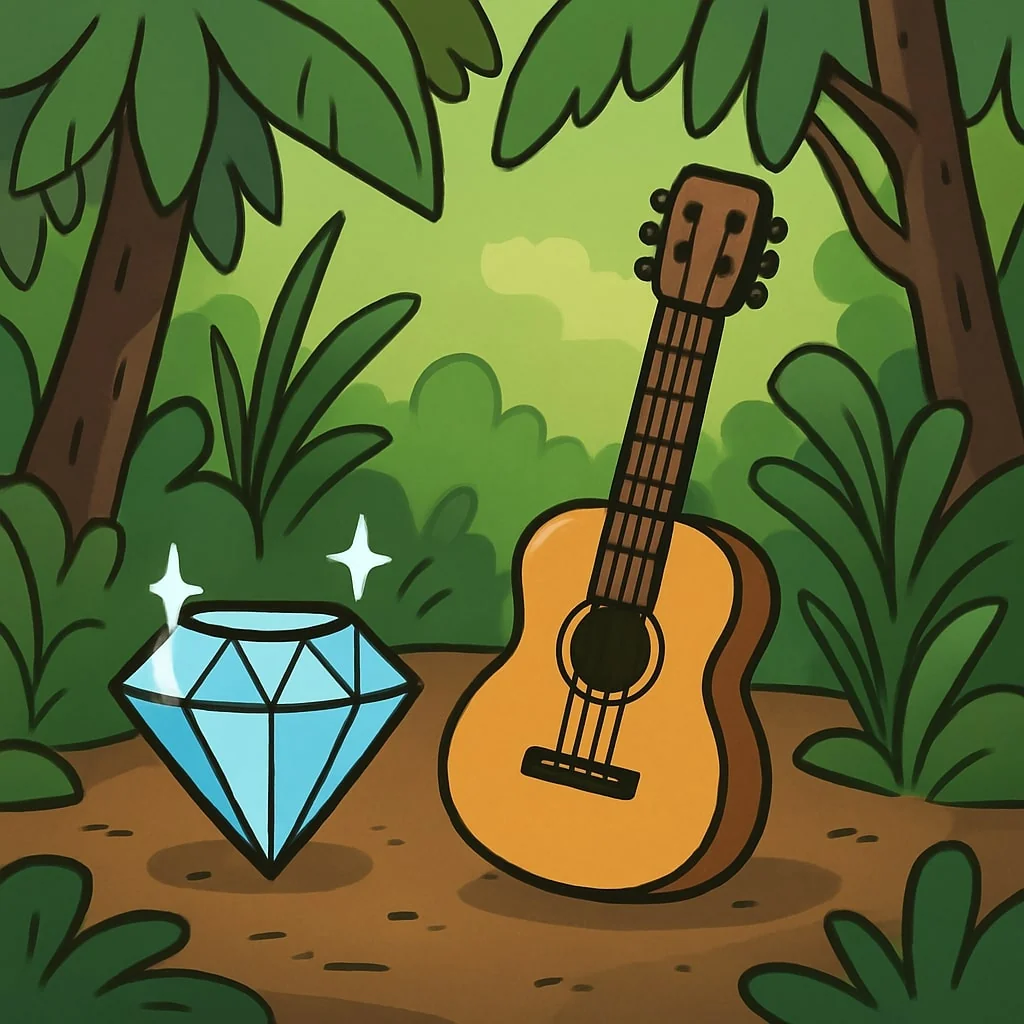
Lab-grown diamonds offer a useful analogy for AI music because they show how a cheaper, scalable alternative can grow without making the traditional product disappear. The two products can serve similar practical purposes while carrying different value because of scarcity, provenance, and the story attached to them.
The diamond analogy is about supply and meaning
Lab-grown diamonds can be produced faster and at lower cost than mined diamonds. They still serve the basic purpose of a diamond, but buyers may value them differently because a mined stone is scarce and has a different origin.
AI music creates a similar distinction. A generated track can be produced quickly and used for listening, videos, games, or creative drafts. Human-made music may carry additional value when listeners care about the artist, performance, history, or circumstances behind the song.
The analogy does not require one category to replace the other. It suggests that different uses can support different forms of value.
Lab-grown diamonds show that alternatives can become large markets
Precedence Research estimated the global lab-grown diamond market at USD 26.05 billion in 2024, USD 29.73 billion in 2025, and about USD 97.85 billion by 2034. The source attributes growth partly to demand for more affordable and sustainable options, especially among millennials and Gen Z.
Those numbers do not predict the size of AI music. The useful point is that an alternative product can become commercially significant because it is cheaper, more available, and good enough for many buyers.
AI music has similar advantages in areas where function matters most. Background playlists, videos, games, prototyping, personalized tracks, and classroom or app use often require music that fits a specific task rather than a famous artist.
Human music can retain value through identity
Human artists offer things that are not contained in the audio file alone. Fans follow people, careers, live performances, mistakes, stories, and cultural context.
That makes artist identity important even if AI-generated audio becomes technically convincing. A listener may choose AI music for a workout or video while still paying to see a favorite artist live or following an album because of who made it.
Hybrid workflows sit between the two. AI can help generate or prototype material, while a human creator decides what to keep, rewrite, perform, and release.
The strongest lesson from the diamond comparison is therefore not that AI music will replace human music. It is that abundant functional music and artist-led music can be valued for different reasons within the same market.