
Ragtime Blues
A cautious, historically grounded tag for music where ragtime syncopation and blues feeling meet. The term appears more useful as a descriptive overlap than as a formally established genre.
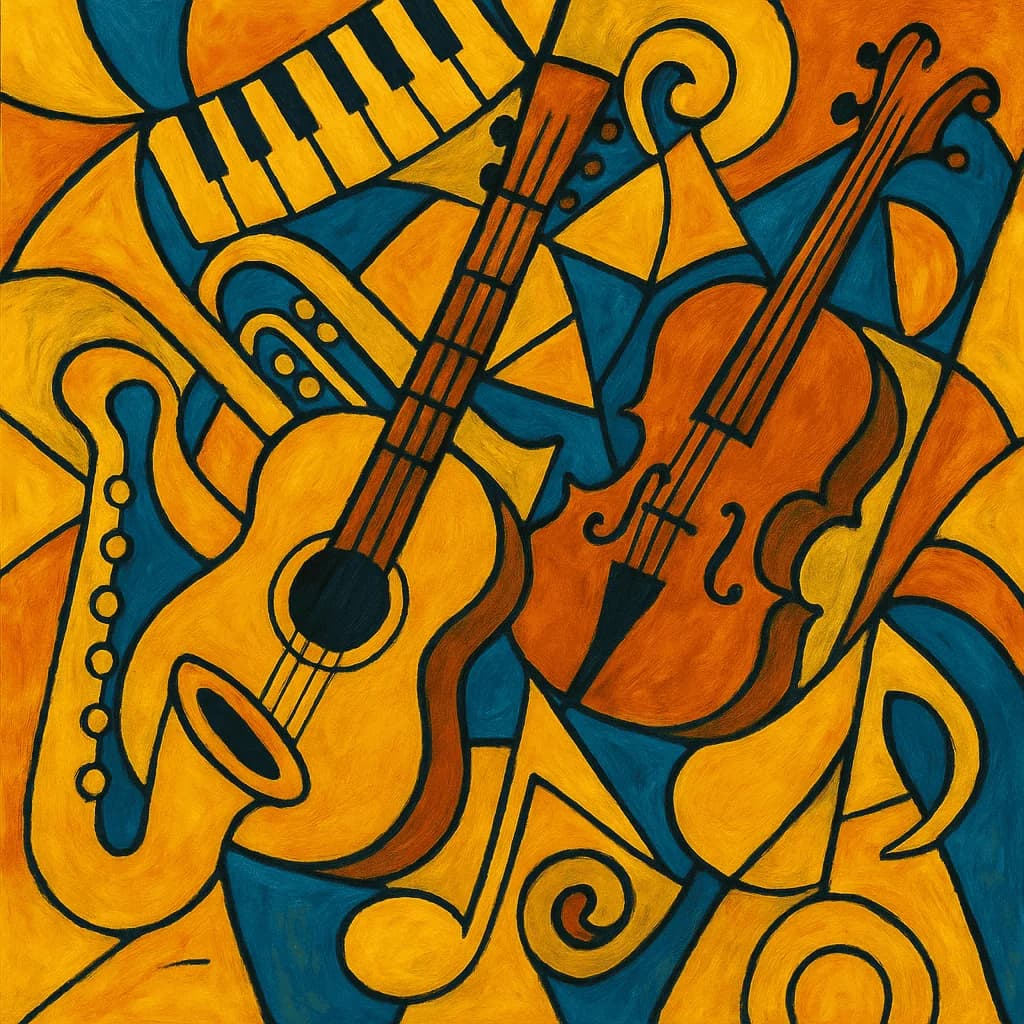
Origins and context
The tag is rooted in early-20th-century American popular music, where ragtime’s syncopated piano writing and blues expression often overlapped in performance, publishing, and later genre descriptions. Library of Congress materials place ragtime’s published rise in the mid-1890s and blues’s emergence in the rural South at the end of the nineteenth century, which helps explain why later crossover pieces could be heard as living in both worlds.(loc.gov)
The sound
Characteristics
- Syncopated piano
- Guitar
- Steady bass patterns
- Blues phrasing
- Dance-oriented pulse
History
Ragtime itself emerged in published form in the mid-1890s and quickly spread through American popular music, especially in the South and Midwest; the Library of Congress describes it as a syncopated piano genre with a steady bass and highly accented treble line. Blues, meanwhile, developed in African American communities in the rural South at the end of the nineteenth century. In practice, the two traditions rubbed shoulders early on, and musicians, publishers, and later historians sometimes used ragtime language to describe blues-inflected songs, piano pieces, and dance music that sat between styles.(loc.gov)
Notable artists
- BSBessie Smith
- JRJelly Roll Morton
- BBBlind Blake
Essential listening
- 1
Explore connected genres
Sources and further reading
- loc.gov
The Library of Congress describes ragtime as a syncopated piano genre with steady bass and accented treble.
- guides.loc.gov
Blues was created and sung by African Americans in the rural American South at the end of the nineteenth century.
- musicbrainz.org
MusicBrainz documents Bessie Smith’s recording of "Alexander’s Ragtime Band," showing how ragtime language lived inside blues repertory.
- History of Ragtime
- Introduction - Ragtime: Topics in Chronicling America
- Introduction - Blues: Resources in the American Folklife Center