Parcels are a band we genuinely like at Lunar Boom. That matters here, because this is not a detached attempt to retrofit a theory onto a song. Their sound has been part of our own musical imagination for years. Lunar Boom’s first album, Tropic Nights, was partly inspired by Parcels and the warm, stylish, rhythm-led world they helped make feel fresh again.
So when we recently revisited Parcels’ “Gamesofluck”, from the 2017 release Hideout Remixed, the ending landed in a way it probably could not have landed at the time. The song itself still has that familiar Parcels mixture of groove, precision, and easy charm. Then the spoken section arrives, and suddenly, in 2026, it sounds as if someone wandered into the room and began describing generative AI music by accident.
To be clear, this is not a claim that Parcels predicted AI music. The fun is exactly the opposite. The lines sound fascinating because they were made before today’s AI music tools became normal browser products, before platforms were debating AI labels, and before people could generate complete songs by typing a prompt. Heard now, the conversation feels like a little time capsule whose meaning has shifted under our feet.
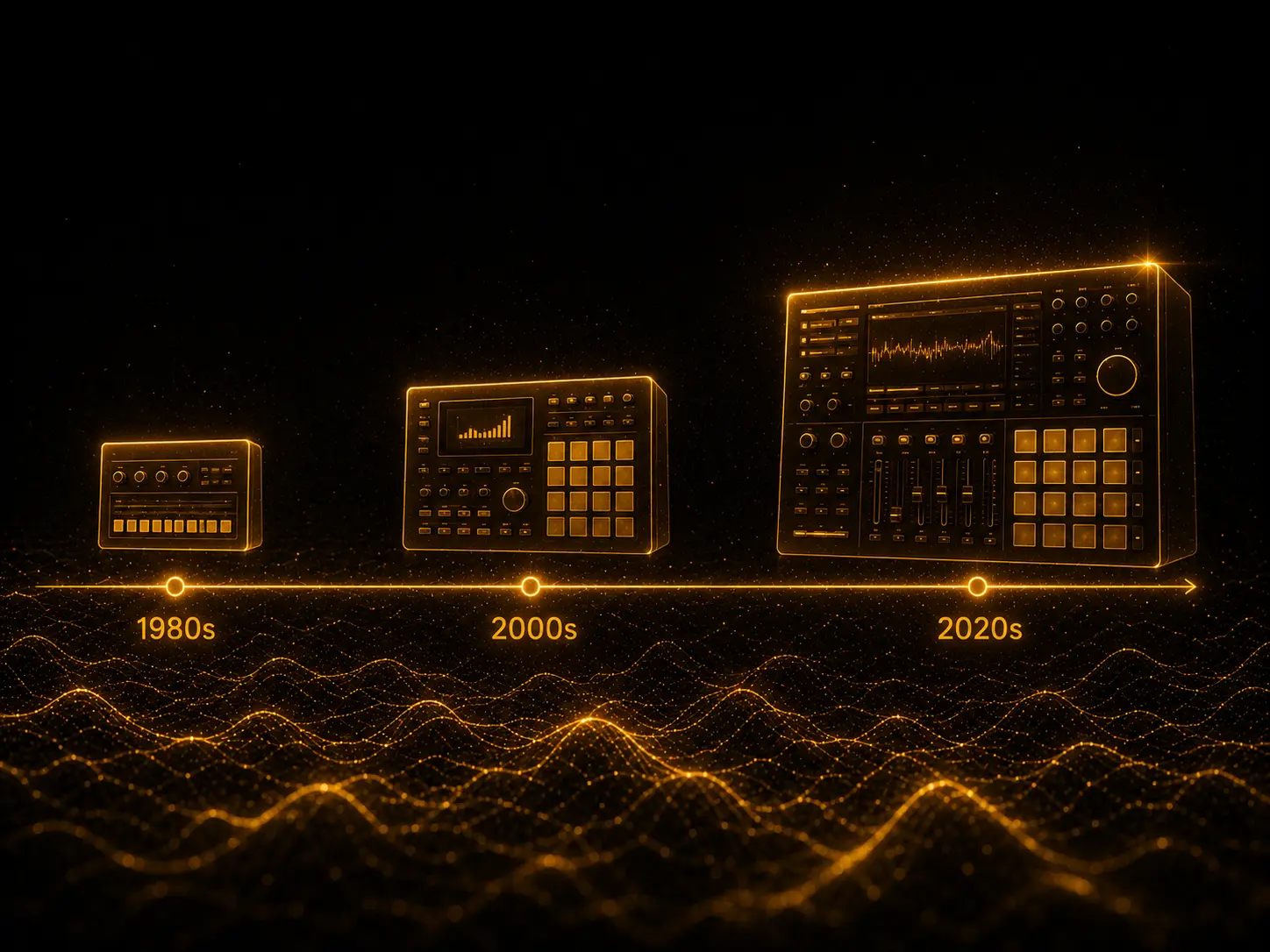
The section includes lines along the lines of “After electronic, after computer for the people,” followed by “Automatic for the people, it’s real.” That sequence is what makes the moment so strangely satisfying. Electronic, computer, automatic. It feels like an accidental roadmap of how music creation has moved through technology, even if the original intent was almost certainly looser, more playful, or simply reflective of production culture.
In 2017, “automatic” could have meant many things. It could have pointed toward sequencers, drum machines, digital production, laptop studios, or the broader sense that computers had already become central to music making. That would have been a reasonable reading at the time. Electronic tools had long since become part of pop, dance, indie, and experimental music. Computers had already changed recording, editing, distribution, and listening.
But in 2026, the word has become much harder to hear innocently. Today, “automatic” can mean writing a few sentences, choosing a mood, adjusting a style reference, and receiving a finished or near-finished track with vocals, arrangement, and production. It can mean making ten variations before lunch. It can mean treating composition as an iterative conversation with a system, not only as a blank page, a rehearsal room, or a studio session.
That is why the most obvious line now jumps out so strongly. “Now is automatic, yes.” It is funny because it is almost too neat. As a description of modern AI music generation, it is not far off. You describe what you want, generate it, listen, change the prompt, generate again, then keep going until something feels right. The creative act has not disappeared, but the speed and volume of possible outputs have changed dramatically.
The next line makes the coincidence even better. “Tomorrow, you will make another and another forever.” That is close to the everyday experience of working with generative music tools. The technology encourages continuation. Another version, another chorus, another genre pass, another vocal style, another instrumental mix. For creators, that changes the meaning of iteration. For listeners, it changes the assumptions behind a finished recording. A song might be the chosen result from a huge field of machine-generated possibilities.
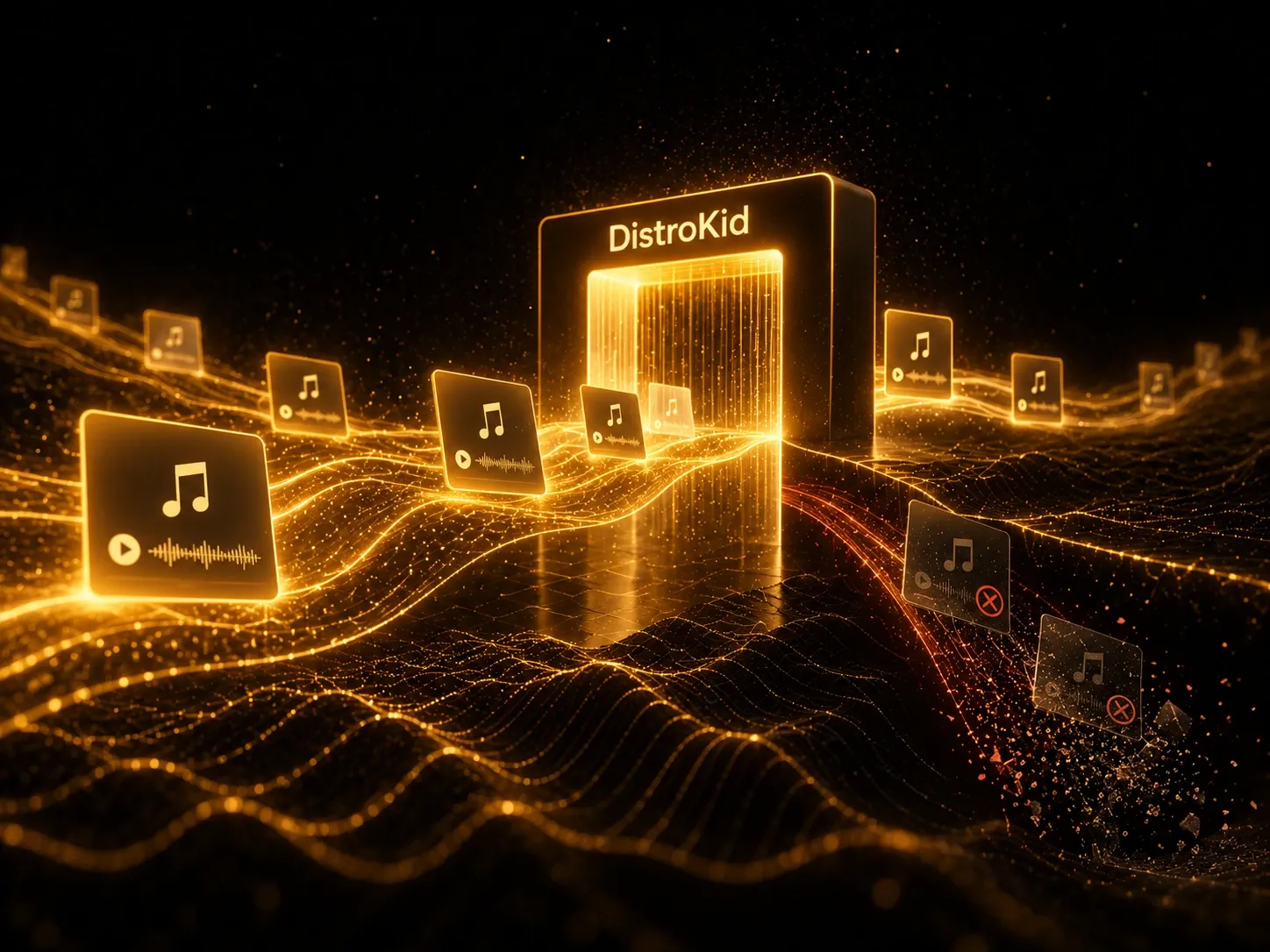
This is one reason the AI music discussion is no longer just a niche technology story. Music Business Worldwide reported that Luminate has launched an AI music identification framework for its CONNECT platform, intended to flag AI-generated songs and artists, with a review process for disputed tags. The same week, MBW reported that ARIA will block wholly AI-generated recordings from Australia’s official charts, while allowing recordings it describes as substantially human made if they meet copyright requirements. These are practical responses to the same reality Parcels’ ending now seems to joke about. When music becomes easier to generate at scale, platforms and chart bodies need new ways to identify what they are counting.
That industry context makes another spoken fragment feel especially sharp. “This imagination twenty, fifty years ago. Now is automatic, yes.” Again, we should not pretend the song was making a technical prediction. Still, the line fits the present almost absurdly well. Not long ago, the idea that an ordinary person could ask a browser tool for a complete song with vocals and production would have sounded like science fiction. Even in 2017, it would have felt futuristic to many musicians and listeners.
Less than ten years later, that kind of workflow is part of the current music landscape. The major companies are not treating it as a passing toy either. Music Business Worldwide also reported that Universal Music Group, Sony Music Group, and Warner Music Group joined a 76 million dollar funding round in Stability AI, a generative AI company whose Stable Audio 3.0 is described as allowing artists to integrate AI music models into their workflows. Whatever one thinks of AI music creatively or legally, the technology is now close enough to the center of the industry that everyone has to develop a position on it.
That is what makes the Parcels moment so enjoyable from our side of the room. A band that helped inspire the sound and atmosphere of our first album also released a song whose ending now sounds like a strangely accurate sketch of the tools we later found ourselves exploring. There is no grand historical claim in that. It is just a pleasing coincidence, and maybe a reminder that pop music often gathers meanings the artist could not fully control.
For AI artists and human musicians alike, the joke has a serious edge. “Automatic” does not answer the important questions. It does not tell us what counts as authorship, what should be chart eligible, how rights should be handled, or how listeners should value abundance. It simply names the feeling of the moment with comic precision. The machine can keep going. The creator has to decide what is worth keeping.
That is why the ending of “Gamesofluck” feels so different now. In 2017, it sounded like a cool, odd, slightly mysterious spoken coda. In 2026, after the rise of text driven music generation, AI tagging frameworks, chart eligibility rules, and model based workflows, it sounds like someone accidentally left a note for the future.
Maybe, almost ten years later, the ending only needs one small update.
“This imagination, twenty, fifty years ago...”
“Now is AI, yes.”