AI-generated music is beginning to develop institutions around itself. The AI Song Contest is preparing its 2026 award show in Bangkok, while Reply's AI Music Contest has already brought AI-enhanced performances onto the stage at Kappa FuturFestival. Reply says its 2026 edition attracted more than 1,400 applications from 45 countries and over 300 submitted performances.
The Academy of AI Music is meanwhile preparing its AIMEE Awards for 2027. Other competitions are experimenting with different models, including the AI.M Awards, which currently offer free entry for their 2026 season.
Another entrant is the Academy of Emerging Music Arts & Sciences, or AEMAS, which is preparing the inaugural Ellison Awards for 2027. Founder Shamielle Alston told Lunar Boom that the organization was created around a question that is becoming increasingly difficult to ignore as generative music improves.
Where, exactly, should the human contribution be recognized?
Awards are starting to define AI artistry
Alston argues that discussion around AI-generated music often places so much emphasis on the technology that the person directing it disappears.
“Technology may help deliver the performance, but it does not automatically supply the artistic purpose behind the work,” she says. In her view, songwriting, composition, production choices and the ability to recognize when a result actually serves the song remain meaningful creative contributions.
That philosophy sits at the center of the Ellisons. The awards currently focus on music containing AI-generated vocals, while human vocal performances are deliberately excluded from competing in the same categories.
Alston argues that a trained human vocalist and an AI-generated vocal involve different creative disciplines. Both can involve substantial human creativity, but AEMAS believes they should not be evaluated as though the performances were produced in the same way.
This is one of the first difficult questions any AI music awards institution has to answer. Before it can decide what deserves an award, it has to decide what kind of work it is actually judging.
The criteria may shape the category itself
AEMAS says eligible Ellison entries will be anonymized using an Entry ID before being assigned to five independent judges. Judges will not receive information about an artist's name, biography or following and will instead score areas including composition, arrangement, production, creativity and overall presentation.
That approach places the emphasis on the finished work rather than the popularity of the creator. Alston says the objective is for “the music to speak before the artist's reputation ever enters the conversation.”
It also reveals something broader about the rise of AI music competitions. Awards do not simply recognize an existing definition of excellence. Their judging criteria can help create one.
Reply's AI Music Contest, for example, evaluates areas such as creative AI use, technical integration and live-performance potential. The AI Song Contest similarly asks entrants to document how AI was used during the songwriting process so judges can consider the nature of the human and machine collaboration.
The Ellisons are taking a different approach by centering conventional musical qualities alongside human creative direction. These competing models may eventually influence how the wider industry talks about skill in AI music.
Abundance creates a new need for selection
This connects with a problem we previously explored in AI Music and the New Burden of Choice.
When producing another musical option becomes inexpensive, selection becomes more important. The same logic may eventually apply at an industry level.
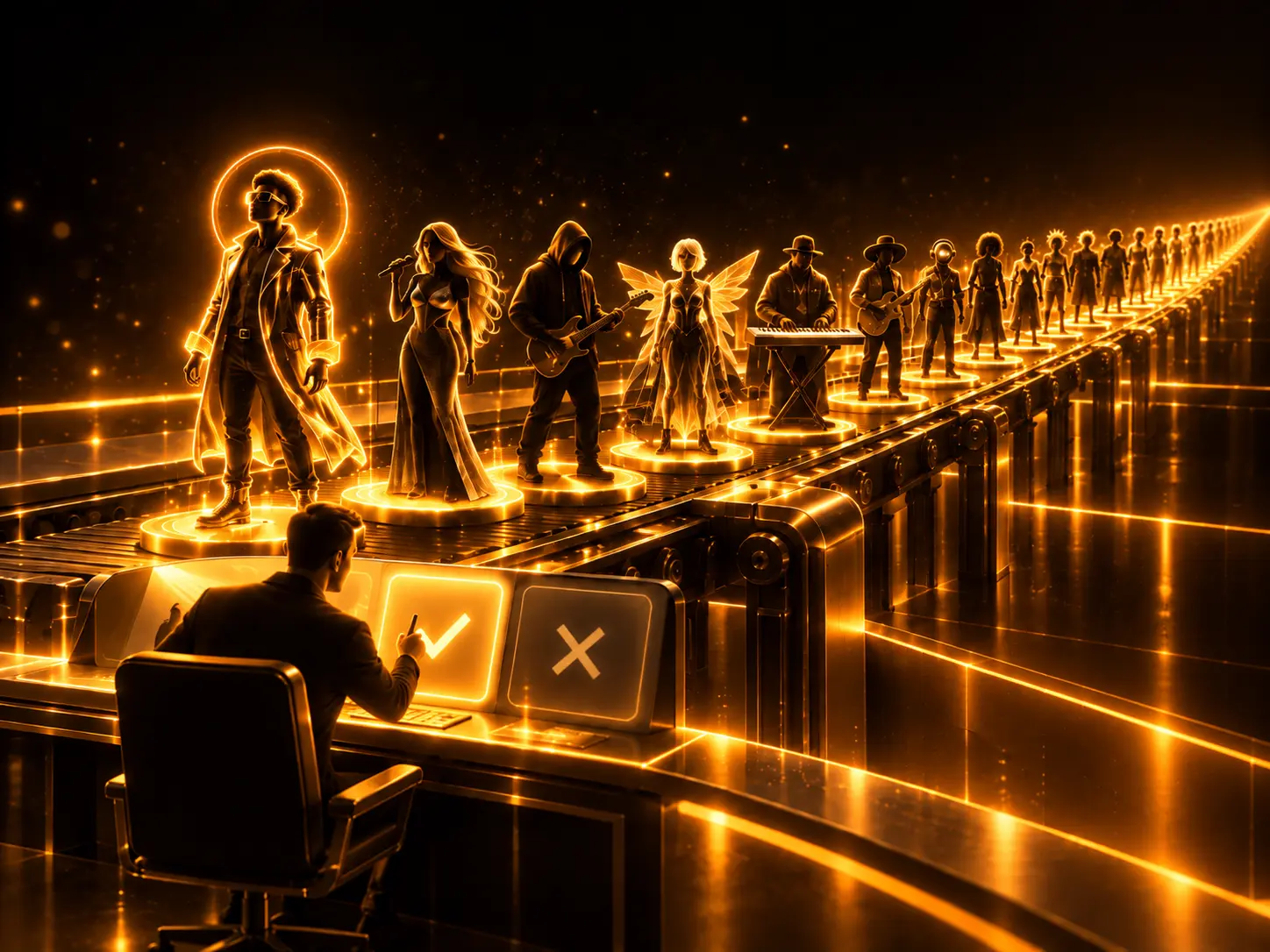
If generative tools dramatically increase the number of songs that can be released, listeners, platforms and creators need more ways to identify work worth paying attention to. Competitions, critics, charts and awards can all become filters inside that increasingly abundant supply.
The rise of AI music awards may therefore signal something beyond a desire for trophies. It suggests that the field is beginning to build institutions capable of deciding what excellence inside AI-assisted creation should look like.
But prestige cannot be created instantly
The difficult part is that an award only has as much value as the credibility surrounding it.
AEMAS will charge a standard $300 entry fee for the inaugural Ellison Awards. Alston says the fee supports administration, five independent evaluations, results certification and the wider awards program. Eligible entrants are also expected to receive a private evaluation report containing their scores and available written feedback from the judges.
AEMAS says entrants will additionally receive participation credentials, while eligible artists can be considered for its Artist Spotlight program and nominees and winners receive further public recognition through the awards program.
For an independent artist, however, $300 remains a meaningful expense. The Ellisons are also entering their first cycle, which means they do not yet carry the historical recognition of an established music award.
Alston acknowledges that limitation directly.
“We understand that credibility must be earned,” she says. “We are beginning with our inaugural awards, and we have no intention of pretending that the history of this institution has already been written.”
That may be the most important test facing not only AEMAS, but the emerging AI awards ecosystem more broadly. Rules and judging procedures can establish a foundation, but prestige ultimately comes from consistency, the quality of recognized work and whether creators and the wider industry begin to care about the result.
AEMAS is aiming beyond one awards ceremony
AEMAS is positioning the Ellisons as the first expression of a broader institution rather than the full extent of its mission.
Alston says the name Academy of Emerging Music Arts & Sciences was chosen deliberately. The organization is not intended to remain tied to one model, one generation of AI technology or even necessarily the categories that exist today.
“We want AEMAS to be ready for the music of tomorrow, not permanently confined to the music of today,” she says.
The organization still intends to preserve some boundaries, particularly its separation between human and AI vocal performances. But its longer-term ambition is to recognize new forms of musical creativity as production technology continues to change.
That raises another question for the emerging AI awards sector.
If AI eventually becomes an ordinary part of music production, will separate AI music awards still make sense?
Some institutions may remain focused specifically on generative music. Others may gradually expand toward whatever new creative practices emerge next.
AEMAS is explicitly planning for the latter possibility. Alston says its categories and eligibility standards may evolve as new technologies create forms of musical work that do not yet exist.
Recognition is becoming part of the AI music infrastructure
For now, competitions such as the AI Song Contest, Reply AI Music Contest, AIMEE Awards and Ellison Awards are experimenting with different answers to the same underlying question.
AI can help create far more music. New institutions are now beginning to decide which parts of that output deserve recognition and what kinds of human contribution should count when they do.
Whether these awards themselves become valuable cannot be established by a rulebook or ceremony alone. Artists, judges and eventually the wider music industry will determine whether their recognition carries weight.
The important development is that the conversation has moved beyond whether AI-generated music belongs in the industry at all.
The next debate is increasingly about how excellence within it should be measured.
More information about AEMAS and the inaugural Ellison Awards is available at aemas.org. Submissions for the 2027 awards are scheduled to run from November 1, 2026 through April 30, 2027.