Alex Viegas does not usually begin a track by choosing a synthesizer or building a beat. He starts with an emotion, an atmosphere, or a scene he can already picture.
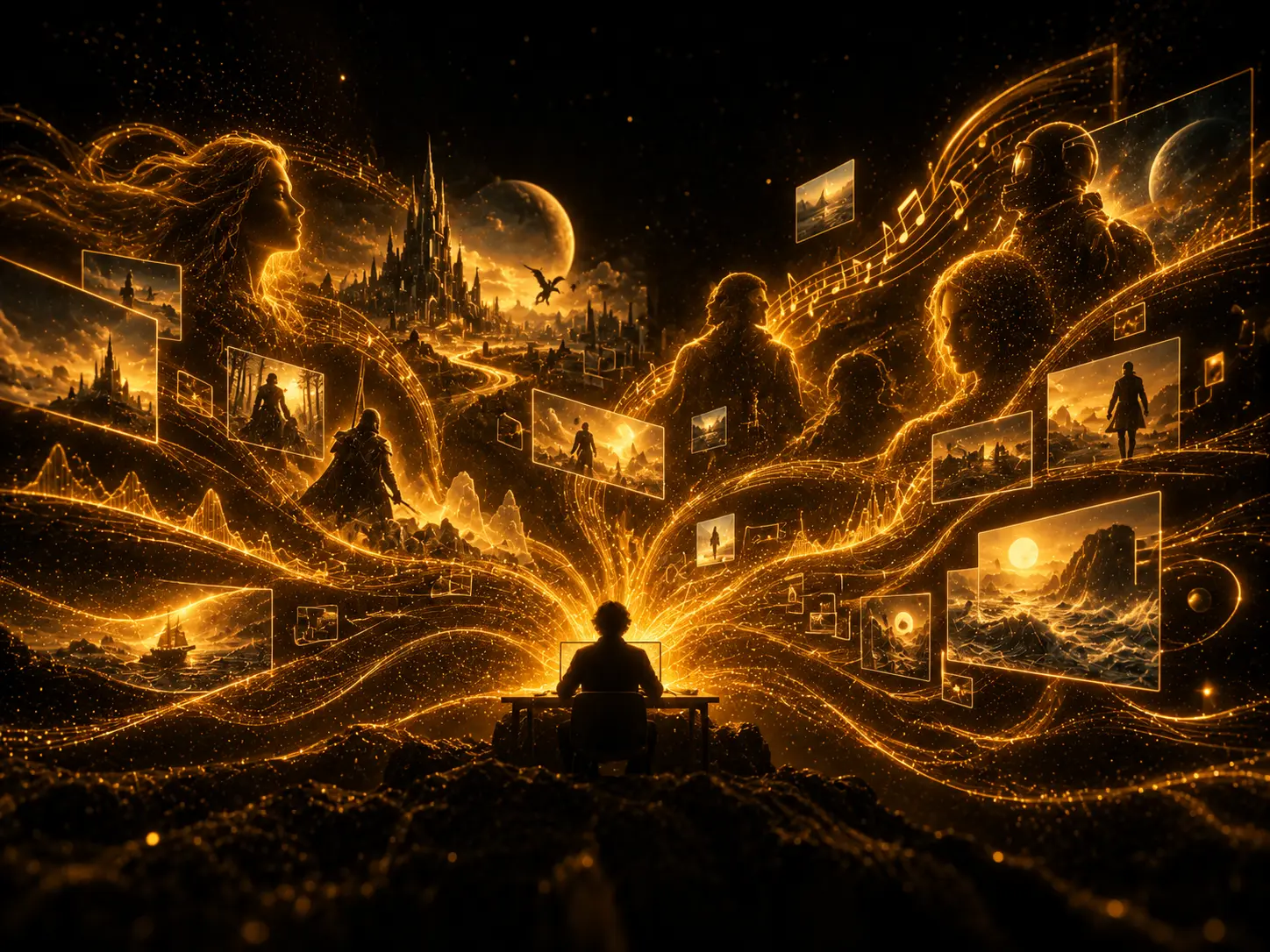
Sick Humanity began that way. Viegas describes imagining something cold, futuristic and uneasy before deciding how it should sound. Only then did he translate that feeling into tension, repetition, space and electronic textures. He calls the process “cinema without a screen.”
That approach reflects his background as a filmmaker, but it also points toward a larger change in AI-assisted creative work. Generative tools are making it cheaper to turn ideas into finished music, images and films. As production becomes easier, the harder questions increasingly concern direction, judgment and whether the finished work gives an audience a reason to care.
AI did not give him the idea
Viegas has been developing The Sower Universe, a science-fiction world connecting music, films and recurring virtual characters. The concept itself predates current generative AI by decades.
He says he had already scripted The Sower in the 1980s, influenced by the films he was watching at the time. The obstacle was not a shortage of ideas. It was the scale of production required to realize them.
A conventional version would have needed actors, sets, visual effects teams, crews and extensive post-production. For an independent creator, Viegas says that would have meant finding the resources of a much larger studio.
His description of what changed is important.
“AI didn't create The Sower. It made The Sower possible on the scale I had envisioned.”
This is one way generative technology could change the economics of creative production. It does not necessarily replace the idea, story or artistic direction. Instead, it can reduce the amount of money, infrastructure and coordination required to test whether those ideas can exist at all.
For Viegas, that has allowed Bryan Stenler Studios to operate more like a small creative production system. The goal is not simply to generate isolated songs or images, but to build a connected fictional world that would previously have required a much larger operation.
Music becomes part of the story
The relationship between film and music is also becoming less linear in Viegas's work.
Sometimes a story creates the need for a piece of music. In other cases, the music itself suggests a character, location or new direction for the story. Tracks such as Apollo, Nargath Galaxy – Void Reign and The Sower are tied directly to characters and places within the wider universe.
Viegas describes the process as cyclical.
“The story creates the music, the music creates images, the images suggest characters, and those characters generate new stories.”
This is where his approach differs in an interesting way from Polish filmmaker Adam Hartwiński, who we interviewed in What Film Directing Can Teach Us About AI Music.
Hartwiński described bringing the language of filmmaking into music. A repeated motif could work like a visual motif, silence could operate like a cut, and the return of a hook could function like a callback.
Viegas is pushing the relationship in another direction. Music is not only being directed like film. It can become part of the mechanism through which the fictional world develops.
A composition can begin as part of a story and then reveal something that sends the story somewhere new. AI-assisted production makes those movements between media easier to test because a creator can move between sound, image and narrative without rebuilding the production process from the beginning each time.
Cheaper generation creates more things to reject
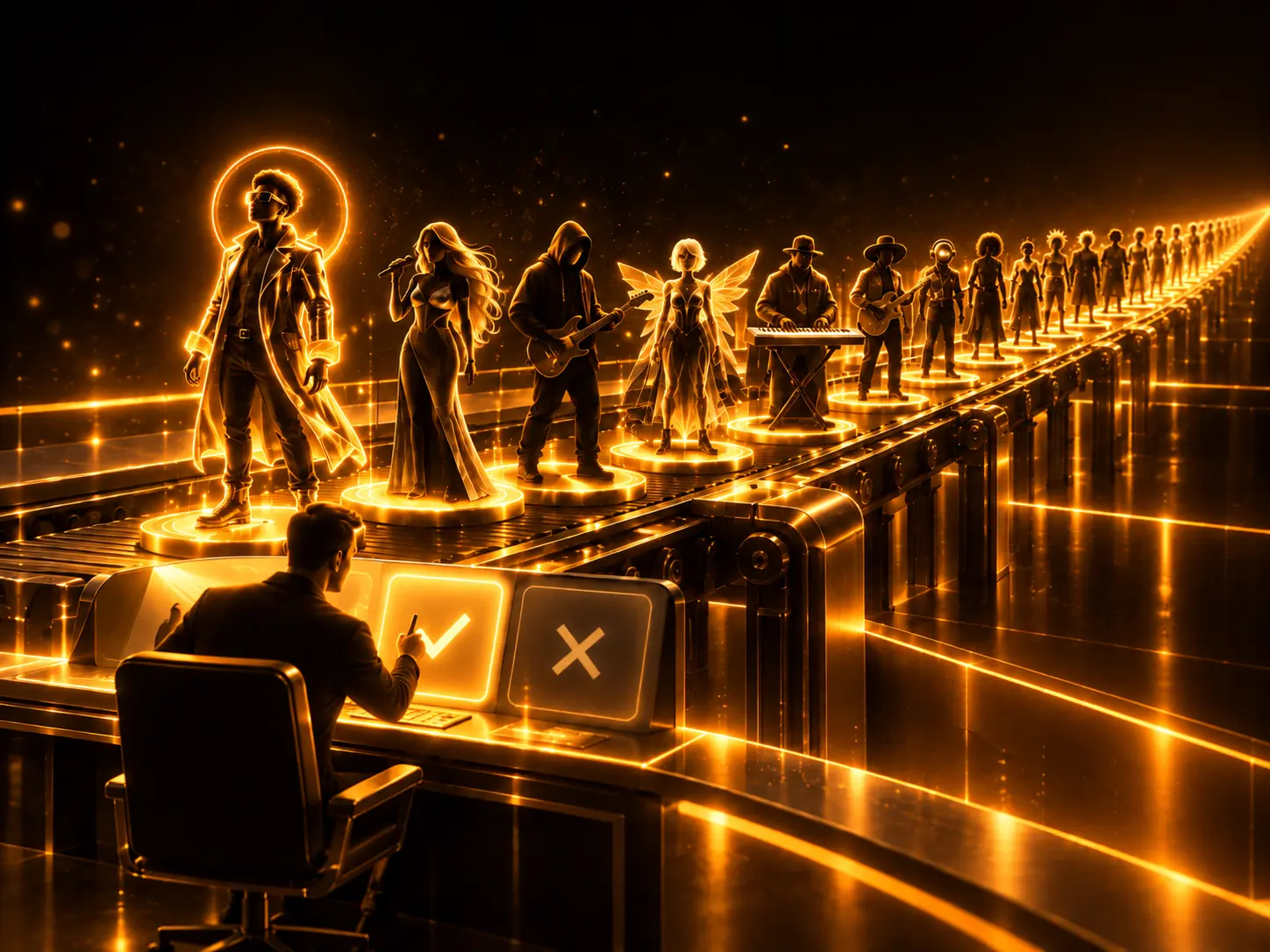
Lower production costs do not remove creative work. In some cases, they create much more material that has to be evaluated.
Viegas says Sick Humanity required extensive curation across generated versions. His example of Lunther – Stone by Stone goes further. He says he chose the final track from 260 generated versions and repeatedly listened through the alternatives before deciding which one belonged in the film.
He is not looking for the version that demonstrates the most technical capability. He asks whether it conveys the intended emotion, preserves the identity of the character and belongs within the wider body of work.
As he puts it, “Creative direction in the age of generative AI is increasingly the art of saying no.”
This has become one of the clearest recurring themes across our interviews.
Hartwiński described rejection as a central creative act. Vitalii Klimenko argued in AI Music and the New Burden of Choice that generation creates options while production creates decisions. Brian Myk similarly discussed the growing importance of judgment in What Skills Should Artists Value in the Age of AI Music?.
Viegas adds an economic dimension to the same problem.
Generating another candidate can become extremely cheap. Human attention does not.
If a model produces hundreds of plausible versions, someone still has to listen to them, compare them and decide which one deserves to move forward. The cost of producing an option falls, while the burden of selecting between options can increase.
The bottleneck moves rather than disappears
This may be one of the more important consequences of generative production.
Creative industries have historically contained many forms of scarcity. Studio time was limited. Recording was expensive. Visual effects required specialist teams. Film production demanded equipment, crews and capital.
Viegas believes generative technology is making some of that production capacity more abundant. His argument is that another kind of scarcity emerges as a result.
“I believe that scarcity fosters connection,” he says. “For a long time, production itself was scarce.”
As technically impressive production becomes easier to access, he expects meaning, identity and emotional continuity to become more important. A polished output may still need to be good, but technical polish alone becomes a weaker reason for choosing one work over thousands of alternatives.
This does not mean production skills stop mattering. Viegas's own process depends heavily on evaluating whether the music works. The change is that production quality can become less scarce at the same time that attention becomes harder to earn.
That shifts pressure toward whatever makes one project difficult to substitute for another.
A world can be harder to replace than a track
Viegas's response to that abundance is to build continuity across works.
Characters including Bryan Stenler, Apollo Viera, Enzo Ravenwood and Lunther Malakar recur inside The Sower Universe. They are intended to have relationships, histories and recognizable roles rather than appearing once and disappearing with the next release.
Artistically, this creates a world that listeners and viewers can gradually learn.
It may also have economic significance.
If individual tracks, images and videos become easier to produce, a creator can place more value on the connections between them. A recurring character, recognizable fictional setting or long-running narrative is not simply another output. It accumulates context each time it appears.
That does not guarantee an audience will care about the world. It does, however, change what the creator is trying to build.
The product is no longer only a song or a short film. It can become a larger piece of intellectual property whose individual releases reinforce one another.
Small creators can begin to resemble studios
This also changes what one person or a small team can attempt.
Viegas describes Bryan Stenler Studios as a response to the realization that generative tools could allow a much smaller creative operation to develop cinematic worlds. That does not make a small studio equivalent to a major film company, but it can narrow the gap between having an ambitious concept and being able to produce a version of it.
The same pattern has appeared elsewhere in our interviews.
Philip Frost described using AI to operate several distinct music projects through Everfrost Music Publishing. VEXSAN discussed directing music, recurring characters and visual identity from within one broader project. Hartwiński moved skills developed through professional film directing into an entire AI-assisted electronic album.
Across those examples, generative technology is not only making individual tasks faster. It is allowing individuals to coordinate a wider range of creative functions.
That could change the structure of creative businesses as much as it changes individual songs.
A creator may increasingly act as songwriter, director, editor, producer and world-builder while using generative systems to execute parts of the work that would once have required separate specialists.
The trade-off is that more responsibility also moves toward the person directing the system. Someone still has to determine what the project is, what belongs inside it and when an output should be discarded.
Transparency can become part of identity
Viegas is also explicit about wanting a visible human presence behind the work.
He argues that platforms are increasingly being flooded with generic AI-generated material, while some creators hide behind artificial personas. That is his assessment of the current market, and his own approach is deliberately different.
He shows his face, identifies himself as the creator and openly discusses AI's role in the production process.
That transparency fits the wider argument about scarcity.
If synthetic voices, images and characters become plentiful, knowing who is directing a project may itself become meaningful. A persistent creator can provide continuity across technologies that may change rapidly from one release to the next.
The model used to create an image may change. The music tools may improve. The virtual characters may become more convincing.
The person deciding what the universe is supposed to mean can remain the same.
The harder question becomes whether anyone cares
Viegas does not think the main challenge for AI-assisted entertainment will remain technical.
The question he sees becoming less interesting is whether something can be generated. Models are making the answer increasingly obvious.
The question he wants The Sower Universe to test is harder.
“Can we make someone care about it?”
That brings the creative and economic arguments together.
AI can reduce the cost of producing music. It can make visual effects available to smaller teams. It can allow creators to test hundreds of alternatives, move characters between media and attempt fictional worlds that previously sat beyond their budgets.
But abundance does not guarantee attention.
If anything, it makes attention more competitive.
The scarce resource may therefore move from the ability to produce something toward the ability to make it coherent, recognizable and meaningful enough that someone chooses to return.
For Viegas, generative technology has made an idea from decades ago much easier to execute. The challenge now is not proving that the world can be generated.
It is building one worth remembering.
Explore Alex Viegas and The Sower Universe
You can explore Alex Viegas and his work at Bryan Stenler Studios and the wider Bryan Stenler Studios project.
For a starting point in his music, listen to Sick Humanity or explore The Sower and Luntherland.