Lunar Boom Learning
Chapter 2
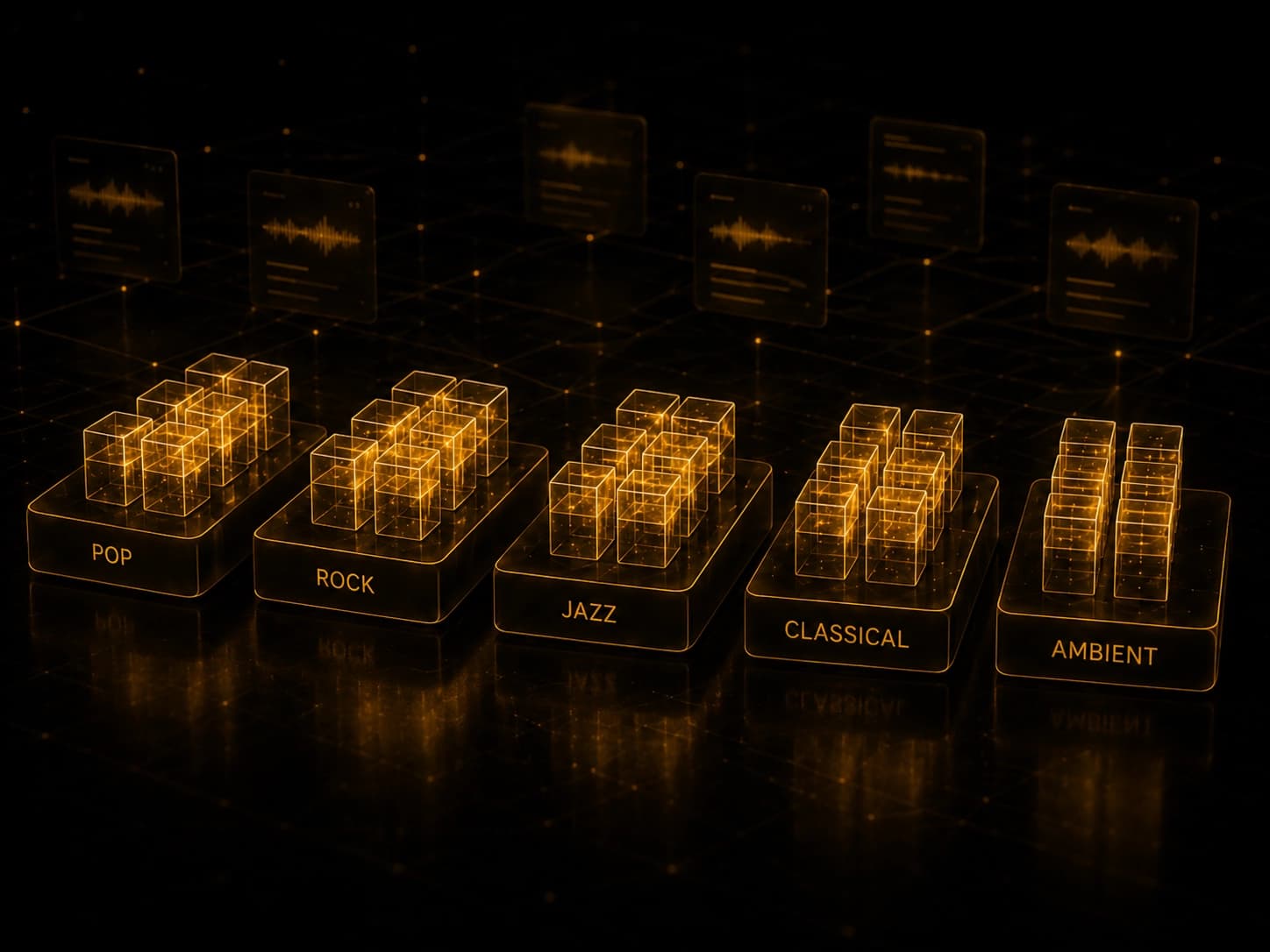
Chapter 2
Building the Musical Training Dataset
Choosing, preparing, describing, and governing the music a model learns from
Build the data foundation for an AI music model by structuring training examples, preparing audio, writing useful descriptions, measuring representation, and recording rights and provenance.
What you’ll learn
- Design training records for different AI music tasks.
- Prepare audio in a consistent, useful, and traceable format.
- Create tags and captions without adding unsupported claims.
- Measure representation, concentration, imbalance, and bias in a music dataset.
- Document licences, consent, rights evidence, and data provenance.
Questions to carry with you
What information should one music training example contain?
How should raw audio be prepared without removing useful musical detail?
What makes a music caption accurate and useful?
How does dataset composition shape model behaviour?
How can every training item be traced back to its source and permissions?
Sections
Section 2.1 · 10 min
What Is a Training Example?
Learn how audio, captions, tags, lyrics, MIDI, and other fields are combined into training records for different AI music tasks.
Section 2.2 · 12 min
Collecting and Cleaning Audio
Learn how to validate, resample, level, trim, segment, and deduplicate audio without removing the musical information a model needs.
Section 2.3 · 11 min
Metadata and Captioning
Learn how tags, metadata, and natural-language captions describe music, why labels often disagree, and what makes a caption useful for model training.
Section 2.4 · 11 min
Dataset Balance and Bias
Learn how genre, language, region, artist, label, and production imbalances can shape model behaviour, and how to measure them before training.
Section 2.5 · 11 min
Licensing, Consent, and Provenance
Learn how composition rights, recording rights, licences, consent, and provenance records fit into a responsible music-data pipeline.
Chapter recap
Chapter takeaway
A music model learns from the records it is shown. This chapter explains how those records are built, how audio and language are prepared, how representation affects model behaviour, and how each asset is connected with its source, permissions, and processing history.
A training example is a task-specific record, not just an audio file.
Audio preparation should improve consistency without removing the musical information the model needs.
Metadata, tags, and captions serve different purposes and should remain traceable to their sources.
Dataset size does not guarantee broad representation. Hours, artists, sources, labels, and intersections all matter.
Licensing, consent, and provenance should be captured when data enters the pipeline, not reconstructed after training.
The dataset is now ready to become model input. Chapter 3 explains how an AI system predicts, conditions, and generates musical sequences.
Check your understanding
Chapter 2 Assessment
Review how training records are structured, prepared, described, balanced, and governed.