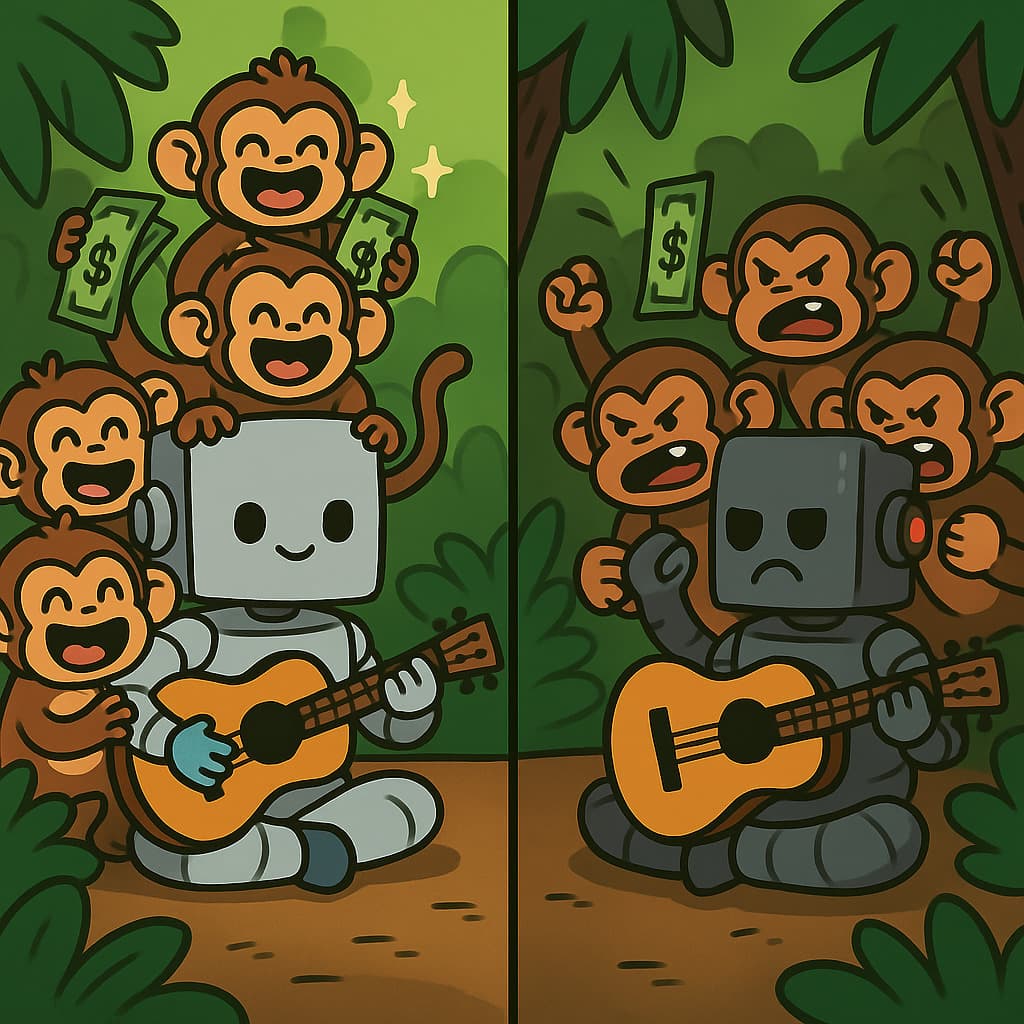
ElevenLabs entered AI music with a rights-first pitch that contrasted sharply with the legal disputes surrounding Suno. The difference is less about which model sounds better and more about how each company approaches the music used to build its system.
ElevenLabs emphasized licensed participation
ElevenLabs announced a music model that it claimed was cleared for commercial use, according to TechCrunch.
The company, previously known for text-to-speech and voice tools, partnered with Merlin Network and Kobalt Music Group. The source says participating musicians could opt in to AI training and share in revenue connected to that use.
That makes consent part of the training arrangement rather than something addressed after the model is built.
Suno faced allegations over training data
Suno had taken a different path and was facing RIAA lawsuits alleging that copyrighted music had been used for training without permission.
Those are allegations, not a final legal finding. The dispute concerns whether and how Suno was allowed to use copyrighted recordings during training.
The source speculates that a broader training set may give Suno access to a wider range of musical examples, but it does not establish that broader data automatically produces better or more diverse outputs.
Rights certainty can become a product feature
For AI musicians, the contrast matters because the legal status of the model can affect how comfortable they feel using it commercially.
A model built around licensed or opted-in material may offer clearer provenance, while a model facing unresolved training disputes creates more uncertainty.
That does not make one system automatically more creative than the other. It makes training rights part of the product decision, alongside sound quality, control, and price.